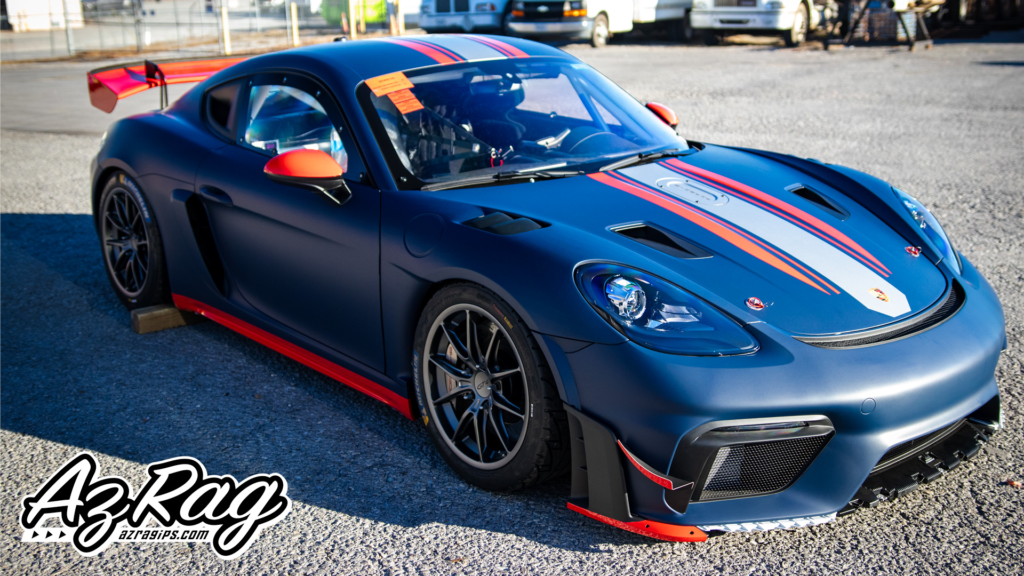
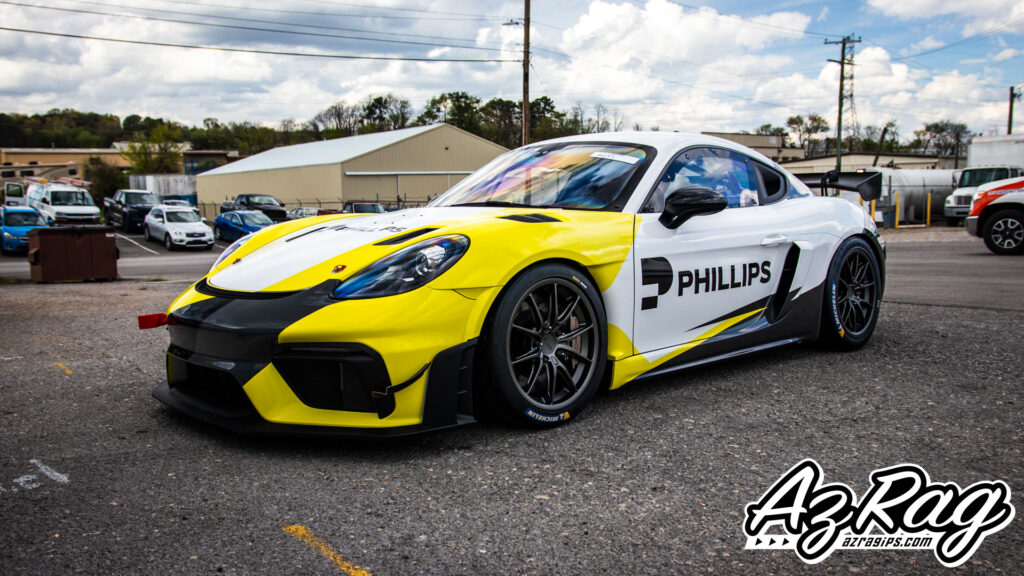
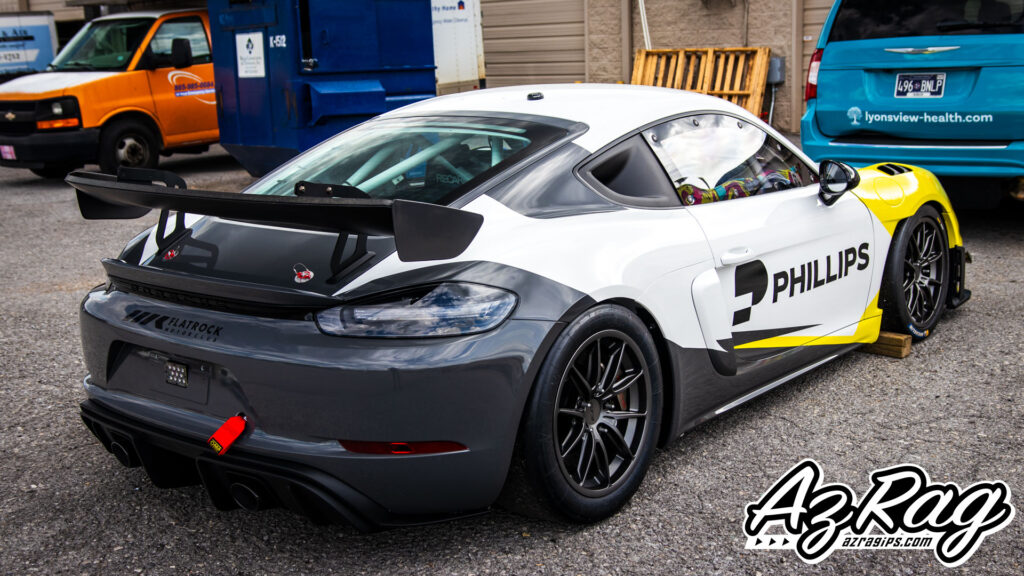
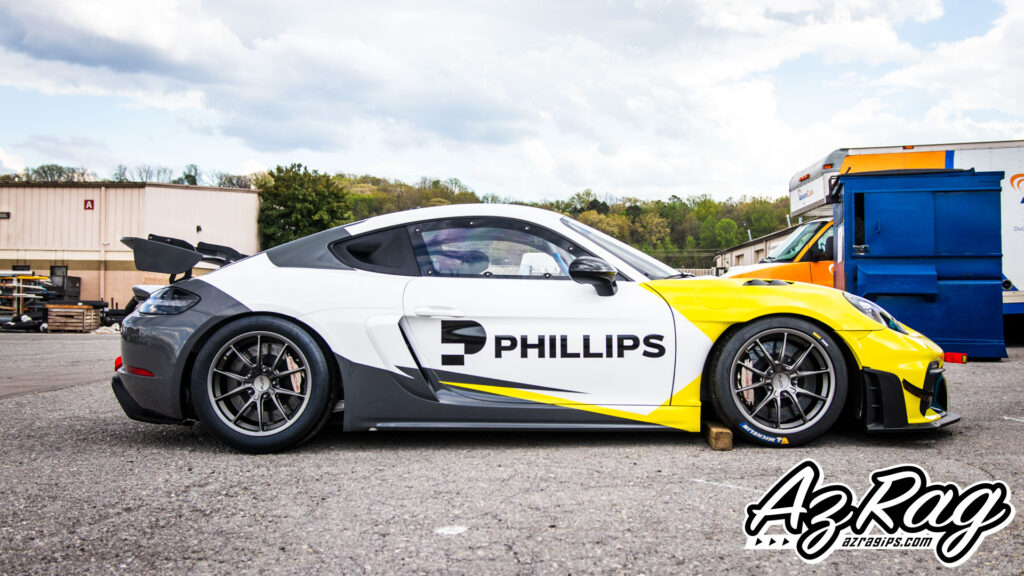
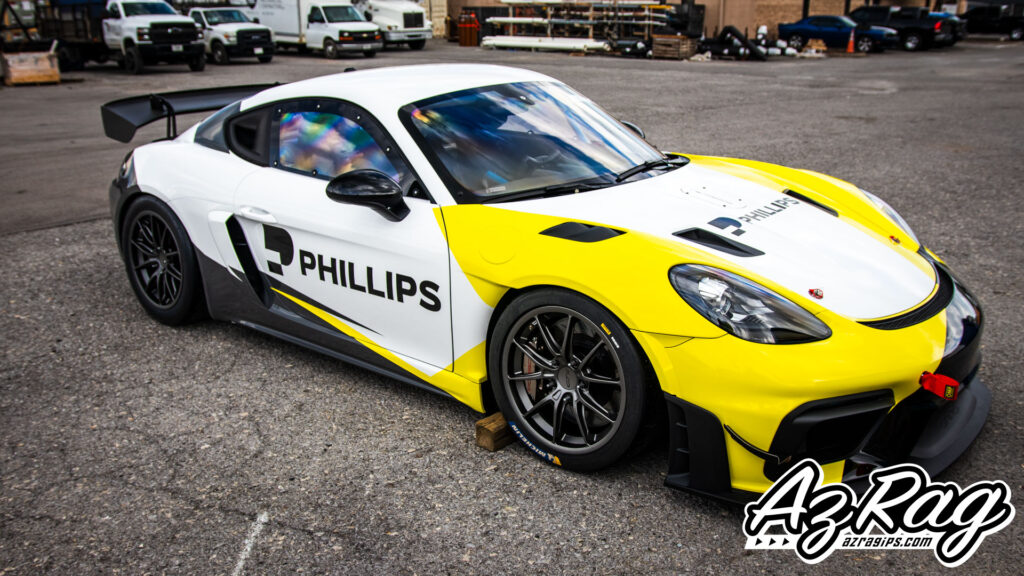
Race liveries live and die by their execution. On a car this fast and this visible, a seam that doesn’t line up or a color boundary that wanders tells the whole paddock what kind of shop wrapped it. This 2026 Porsche GT4 RS Clubsport came to us for a full multi-color livery build, and the result is exactly what professional motorsport graphics should look like.
The Brief
The client wanted a clean, sponsor-forward race livery for competition use. Four materials. Four distinct zones. One cohesive design that reads fast standing still.
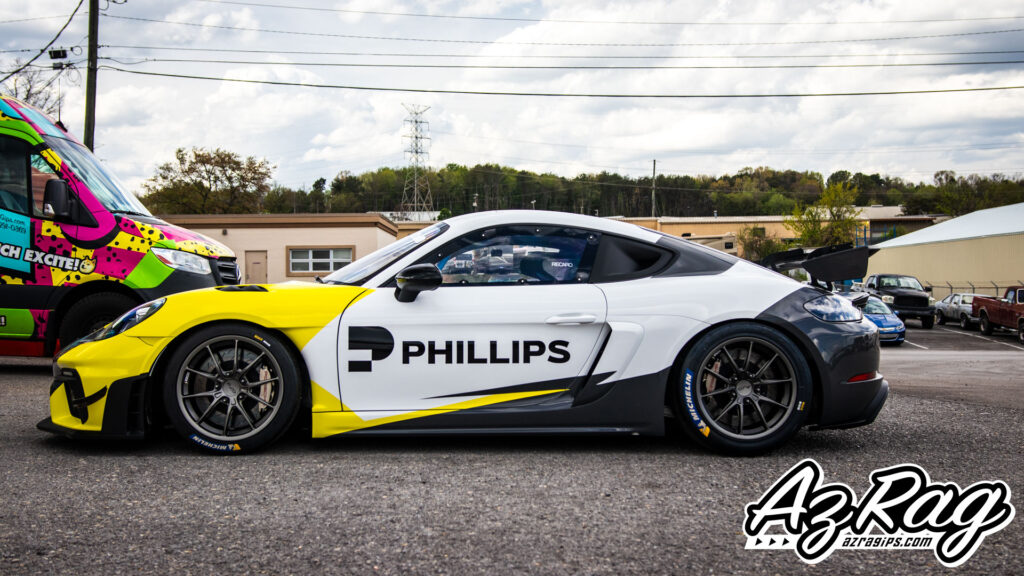
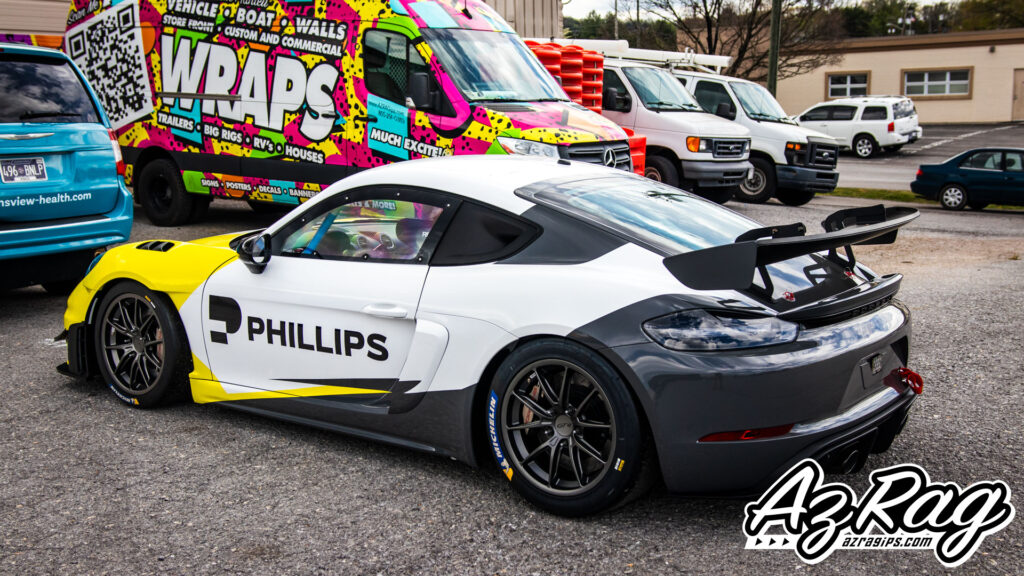
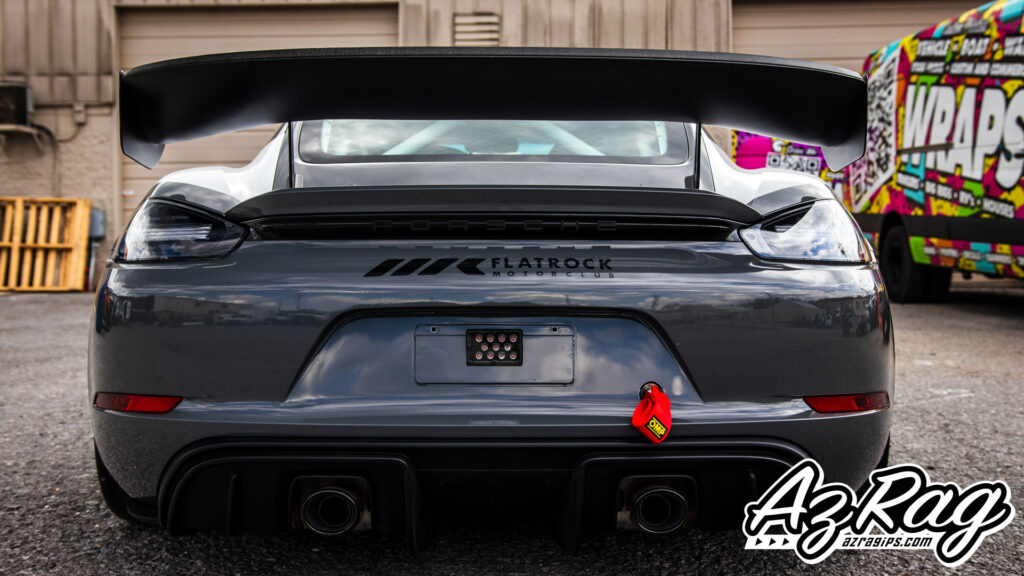
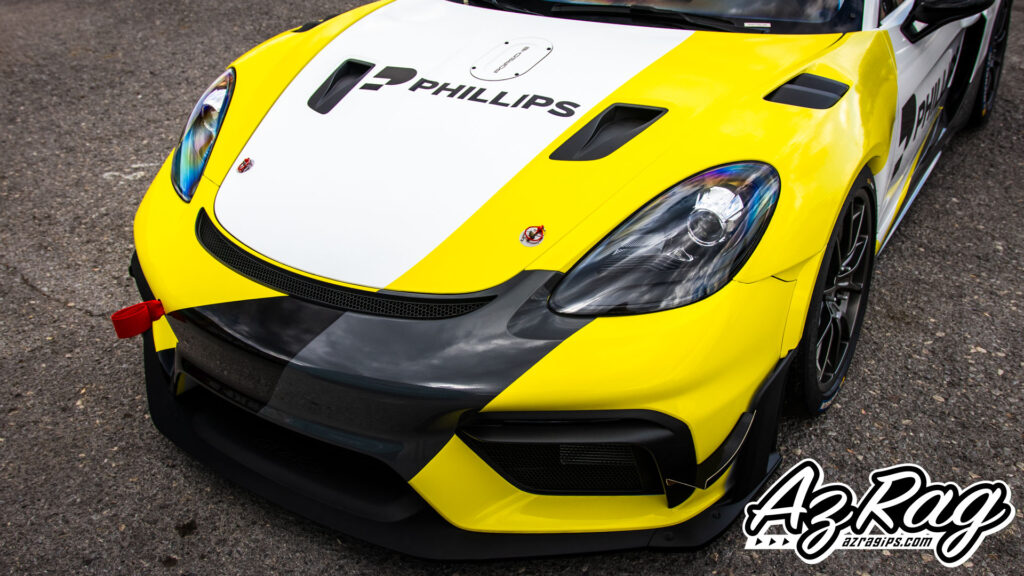
The color palette: 3M 2080 Gloss White on the upper body, 3M 2080 Lucid Yellow on the front fenders and rear quarter, 3M 2080 Gloss Black for the accent elements, and Oracal Gloss Dark Grey across the lower panels, sills, and rear fascia. The Phillips branding anchors the sides in white on the dark grey field, giving it the high-contrast readability that sponsor graphics need at speed.
Why Multi-Color Applications Are More Demanding Than They Look
A single-color wrap is a craft challenge. A four-color livery is a coordination problem on top of that craft challenge.
Every color boundary has to be planned before the first piece of film goes down. Where two colors meet at a body line, the seam needs to fall in a location that reads intentionally — not as a mistake. Where colors overlap at a recessed edge or trim channel, the underlap has to be clean enough that nothing lifts over time.
On a GT4 RS Clubsport, the wide-body aero kit adds complexity. The front splitter, side sills, rear diffuser, and swan-neck wing all require their own treatment. The dark grey Oracal runs across several of these elements, and the transitions into yellow and white had to hold their lines across compound geometry.
Material Selection
3M 2080 cast film was used for the white, yellow, and black sections. Cast film conforms to the GT4’s body contours without the material memory that causes calendered vinyl to lift at edges and curves. For a car that will see track heat, paddock sun, and high-speed airflow, film longevity at the seams matters.
The Oracal Gloss Dark Grey fills the lower panels where the design calls for a cooler, heavier visual weight. The contrast between the dark grey base and the Lucid Yellow above it is sharp and intentional — it creates a clear visual split that makes the car look wider and more planted.
As a certified Oracal installer and 3M Preferred Installer through the United Application Standards Group (UASG), we work with both material families regularly. Knowing how each film behaves at edges and under heat is what keeps a livery looking right after its first event weekend.
The Result
The Phillips GT4 RS Clubsport is a working race car, not a show piece. The livery is built to perform on track and look right in the paddock. Every panel is clean, every color boundary is where it’s supposed to be, and the sponsor graphics are placed for maximum visibility from trackside.
If you want to see more builds like this, the portfolio has the range.
Why AZ Rag for Race Liveries
Race car wraps require tighter tolerances than street work. The vehicle will be photographed from every angle under good light, and any installation flaw will be documented. We’ve wrapped competition cars across multiple classes and know what that standard requires.
We are certified through 3M and Oracal and handle design, print, and installation in-house. For a multi-color livery build, that coordination matters.